Von Herodas zu Elytis
Where to buy
Amazon’s price changes daily, so the most accurate place to see it is there, at the moment you buy.
View on AmazonAbout the book
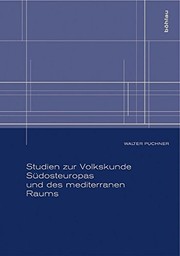
The monography includes ten studies, starting from the 3rd century B.C. and finishing in the 20th century. The first chapter, "The mimiambes of Herodas in Late Antiquity: declamation for a solo mime or theatrical performance?" deals with the seven (or eight) texts of the "mimiambes" of Herodas (or Herondas or Herodes) in the third century B. C., short dialogical scenes of urban life in the hellenistic epoque, written for declamation by a single mime performer. The second chapter, "Christus patiens and ancient tragedy. The loss of scenic understanding during the Byzantine middle ages", analyses the extended dialogical cento-text of "Christus patiens" and the numerous problems which are set by this unique compilation of ancient tragic sources and the christian Gospels, giving arguments for the controversal dating of the text (4/5th century or 11/12th), a hypothesis of the authorship and the intended auditorium, and discussing the literary genre as well: Christian tragedy, Passion Play or dialogical cento-poem? The third chapter, "The Cyprus Passion Cycle and its problems", analyses a similar cento-text (written before 1320) and highlights its philological problems (authorship, dating, western or eastern origin, theatricality etc.), open problems which have cumulated a numerous highly controversal bibliography. The text is unique in Byzantine literature because of his prologue, addressing clearly the organisator of an intended scenic production, but from the citations of biblical and apocryphical sources only the first words (incipit) are written down and linked together with "scenic directions" put in the imperative. The fourth chapter, "The Greek chapbook of Bertoldo (1646): the dialogical structure of a popular reading matter", analyses one of the most popular chapbooks of post-byzantine Hellenism; the narrative structure of the comic story is interspersed with many dialogical scenes in direct speech, in such a way that the reader is many times transformed in the spectator of a scene played in front of him. The fifth chapter, "Germanograecia at the beginning of the 19th century: the literary translations of Konstantinos Kokkinakis and Ioannis Papadopoulos", analyses the translations of four theatre plays of August von Kotzebue by Konstantinos Kokkinakis (edited in Vienna 1801) and the two dramatic translations of Ioannis Papadopoulos, the "Quäker" by the same author (Bucharest 1913/14) and "Iphigenie in Tauris" by Johann Wolgang von Goethe (edited in Jena
Book details
- Language
- German
- Publisher
- Böhlau
- Editions
- 1
- Pages
- 526
- ISBN
- 9783205787105
Data source: Wikidata
More by Walter Puchner