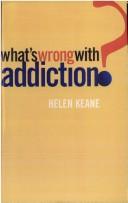
What's Wrong With Addiction?
Helen Keane · 2002
Where to buy
Amazon’s price changes daily, so the most accurate place to see it is there, at the moment you buy.
View on AmazonThis is an affiliate link: if you buy through it, the site earns a small commission at no extra cost to you, which helps us bring quality content and maintain the site. As an Amazon Associate we earn from qualifying purchases.
About the book
The most common questions I receive as an addiction psychiatrist are, "How do you know when someone is addicted?"; "Can't anything be considered addictive?"; and "How can you stand to work with addicts?" Interestingly, the answers to these questions are not simple. A number of theories have tried to explain the concept of addiction, often standing in stark contrast to one another. These theories range from the medical model (addiction as a neurobiological disease) to models of morality (addiction as conscious self-destruction). These are the primary issues that Helen Keane, Ph.D., takes on in her book What's Wrong With Addiction. The book is an extended analysis of the ambiguities of addiction. Keane is a research fellow at the National Centre in HIV Social Research at the University of New South Wales in Australia. Her principal theme is that discourse on addiction can have a powerful impact on society by influencing those who are involved in the decision-making process. Popular culture, politics, and the medical fields have portrayed addiction as a disease. As a result, addicts are considered to be without free will, "compelled" to stay with the addiction. As a result, freedom is lost, resulting in further stigmatization. Timothy Fong, M.D. Dr. Fong is assistant clinical professor at the Neuropsychiatric Institute and Hospital and director of the gambling studies program at the University of California, Los Angeles. Review published in: Psychiatric Services; Arlington 57.1 (Jan 2006): 149.
Book details
- Year
- 2002
- Language
- English
- Publisher
- NYU Press
- Editions
- 3
- Pages
- 228
- ISBN
- 9780814747643
Data source: Wikidata