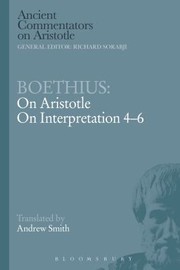
On Aristotle On Interpretation
Richard Sorabji · 2011
איפה לקנות
המחיר באמזון משתנה מדי יום, אז הכי נכון לראות אותו שם ברגע הקנייה.
לצפייה באמזוןזה קישור שותפים: כשקונים דרכו, האתר מקבל עמלה קטנה בלי תוספת במחיר עבורכם, וזה עוזר לנו להביא תוכן איכותי ולתחזק את האתר. בתור שותפים של Amazon אנחנו מרוויחים מרכישות מתאימות.
על הספר
"Boethius (c. 480-c. 525) was a Christian philosopher and author of many translations and works of philosophy, most famously the Consolations of Philosophy which were probably written when he was under house arrest, having been accused of treason by King Theoderic the Great. He was subsequently executed. On Interpretation is the second part of the Organon, as Aristotle's collected works on logic are known; it deals comprehensively and systematically with the relationship between logic and language. In his first six chapters, Aristotle defines name, verb, sentence, statement, affirmation and negation. Boethius preserves lost interpretations by two of the greatest earlier interpreters, Alexander and Porphyry, and the defence of the work's authenticity against criticism. He records the idea of Porphyry that Aristotelians believe in three types of name and verb, written, spoken and mental, in other words a language of the mind. Boethius' commentary formed part of his project to bring knowledge of Plato and Aristotle to the Latin-speaking world. It had great influence, remaining the standard introduction to On Interpretation throughout the Latin Middle Ages."--Bloomsbury Publishing Boethius (c. 480-c. 525) was a Christian philosopher and author of many translations and works of philosophy, most famously the Consolations of Philosophy which were probably written when he was under house arrest, having been accused of treason by King Theoderic the Great. He was subsequently executed. On Interpretation is the second part of the Organon, as Aristotle's collected works on logic are known; it deals comprehensively and systematically with the relationship between logic and language. In his first six chapters, Aristotle defines name, verb, sentence, statement, affirmation and negation. Boethius preserves lost interpretations by two of the greatest earlier interpreters, Alexander and Porphyry, and the defence of the work's authenticity against criticism. He records the idea of Porphyry that Aristotelians believe in three types of name and verb, written, spoken and mental, in other words a language of the mind. Boethius' commentary formed part of his project to bring knowledge of Plato and Aristotle to the Latin-speaking world. It had great influence, remaining the standard introduction to On Interpretation throughout the Latin Middle Ages.
פרטי הספר
- שנה
- 2011
- שפה
- English
- הוצאה
- Bristol Classical Press
- מהדורות
- 1
- עמודים
- 151
- ISBN
- 9780715639191
מקור הנתונים: Wikidata
עוד של Richard Sorabji